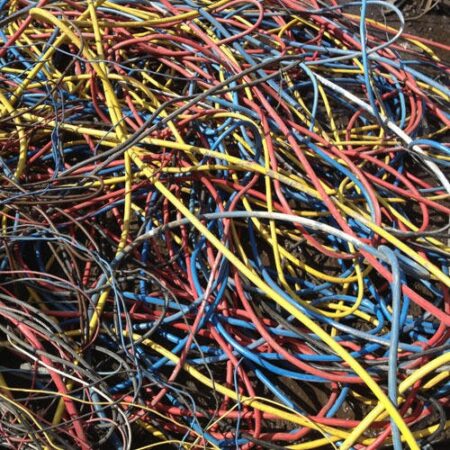
♻️ What is Scrap Cable? Precious Metal Resource
Scrap cableelectrical and electronic systems that have reached the end of their service life, are damaged, or are technologically obsolete, and having recycling potential This is a general name given to cables. These cables contain… copper or aluminum Due to the presence of valuable conductive metals, these materials have significant commercial value in the scrap market. During the recycling process, these metals are separated from plastics, rubber, or other insulation materials and reintroduced into the economy.
🔍 Types of Scrap Cables and Their Recycling
The recycling value of scrap cables, type of conductor, cable thickness And insulation ratio It is determined according to factors such as (metal yield). The main types are as follows:
Stripped Copper Cable: It is the most valuable type of scrap metal, consisting of pure copper wire with all its outer insulation (plastic/rubber) completely stripped.
Mixed Cable: It is a mixed bundle containing cables of different thicknesses and types (e.g., household wiring, data cables).
Underground Power Cable: These are heavy-duty industrial cables with thick insulation, sometimes armored, and typically containing high amounts of copper or aluminum.
Antigron Cable: These are multi-core, PVC-insulated cables commonly used in indoor installations.
TTR Cable: These are multi-core, flexible cables commonly used in household appliances.
Aluminum Cable: These are lighter cables with aluminum conductors instead of copper, and they have a lower value compared to copper cables.
🏭 Recycling Process
Recycling scrap cables is of great environmental and economic importance:
Collection and Classification: Cables are categorized according to their type and metal content.
Crushing and Separation: The cables are broken down into small pieces (granules) using specialized machines (crushers). Then, the metal (copper/aluminum) and plastic (insulation) are separated using density differences or airflow.
Melting: The resulting pure metal granules are processed in melting furnaces to create new raw materials (ingots, wire rods, etc.).
Scrap cable recycling, It prevents the depletion of natural resources., It saves energy. and by reducing the amount of waste protects the environment.